
Windows that perform well inland often fail much sooner on Hatteras Island and Ocracoke. Salt air corrodes metal parts and eats away at sealants. Wind-driven rain finds its way through gaps that would stay dry elsewhere. High humidity and intense sunlight break down materials faster than you might expect.
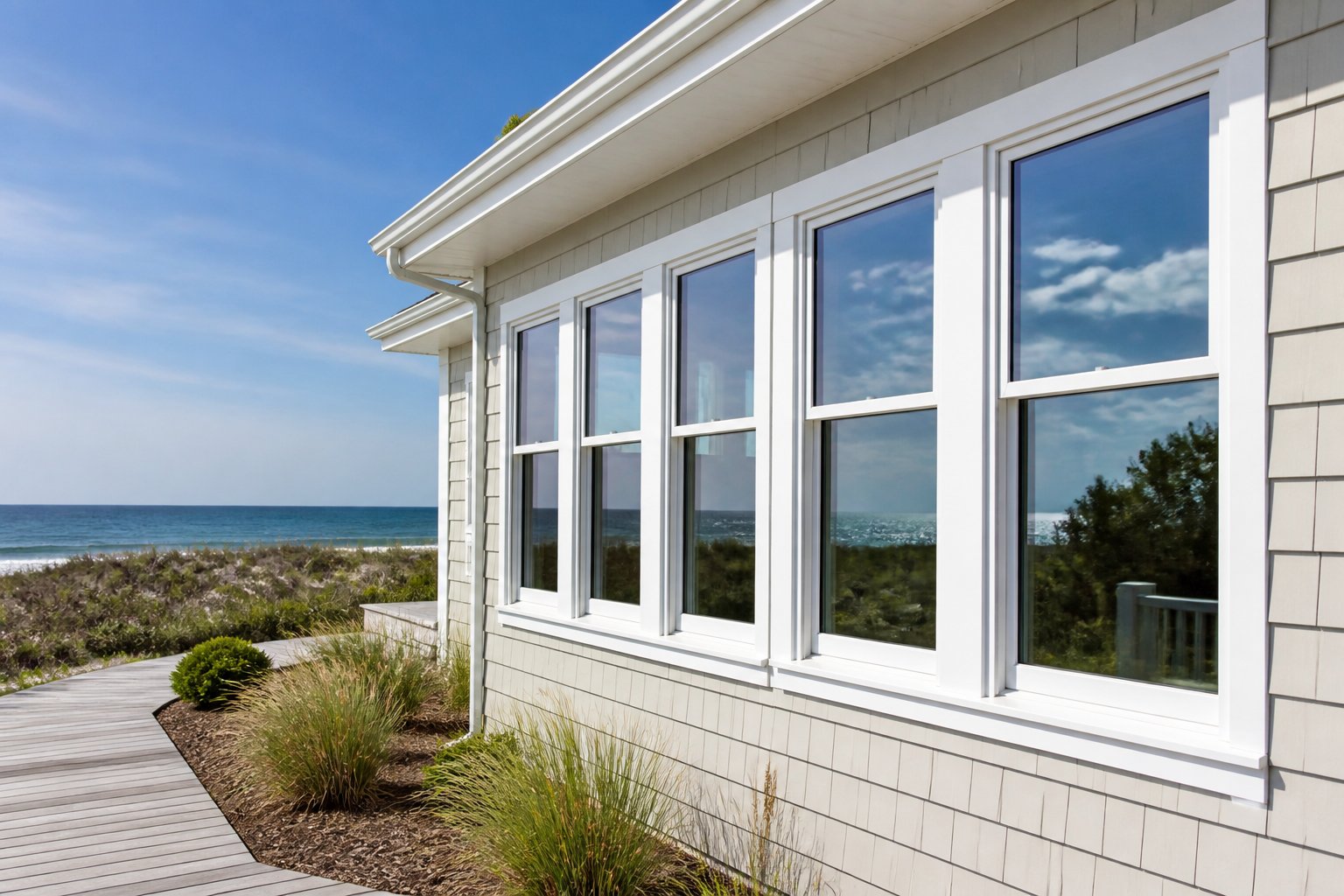
If you own a home or rental property from Rodanthe south to Ocracoke, your replacement windows need to be matched to your specific exposure and installed with coastal conditions in mind. An oceanfront home in Buxton faces different challenges than a soundside cottage in Hatteras Village or a home tucked behind the dunes in Waves.
This guide explains how salt, wind, water and sun impact window performance on the island. You’ll learn which materials and features hold up best, how location affects product choice, and what installation details prevent leaks and early failure. Whether you’re replacing a few failing units or planning a whole-house upgrade, understanding these factors helps you avoid costly mistakes.
Environmental Factors Impacting Window Longevity
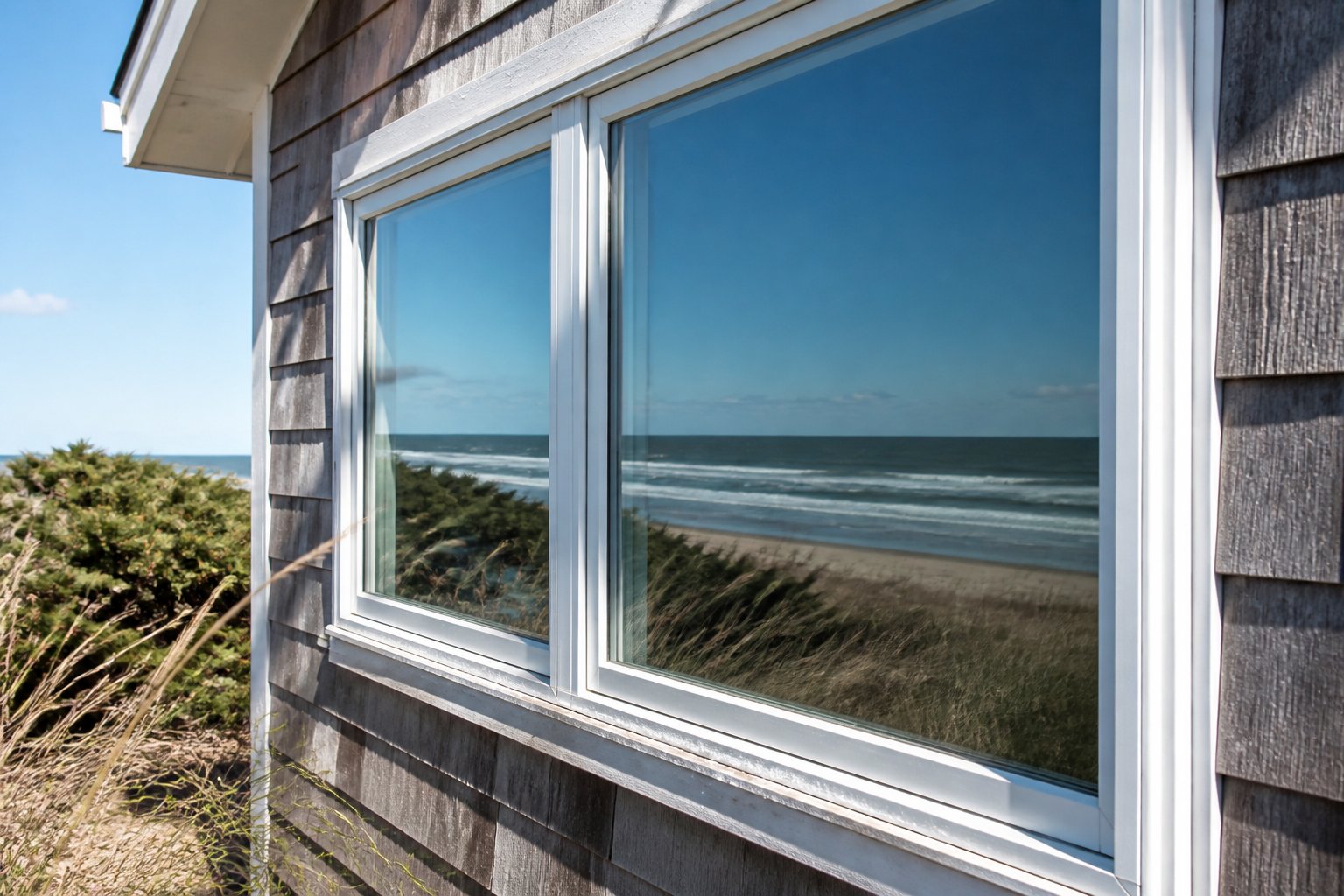
Windows on Hatteras Island and Ocracoke face relentless exposure to salt air, wind-driven rain, and intense UV radiation that can shorten their lifespan by years if you choose the wrong materials or installation methods.
What Makes Hatteras Island and Ocracoke Especially Hard on Windows
Your windows face unique challenges on Hatteras Island and Ocracoke that don’t exist inland. These barrier islands sit exposed between the Atlantic Ocean and Pamlico Sound with minimal protection from trees or elevation changes.
Oceanfront homes in Rodanthe, Waves, and Salvo take the most direct impact from northeast storms. Your windows here endure salt spray with nearly every wind event. Soundside properties in Frisco and Hatteras Village face gentler conditions but still deal with high humidity and seasonal storms.
The constant coastal winds carry salt particles that settle on every surface. Summer brings intense sunlight that degrades sealants and finishes faster than in mainland locations. Winter northeasters push horizontal rain against your windows with enough force to find any weakness in the installation.
Homes in Buxton near Cape Hatteras and throughout Ocracoke experience similar conditions. The exposed location means your windows never get a break from moisture, salt, or wind.
How Salt Air Affects Window Frames, Finishes, Hardware and Fasteners
Salt air corrodes metal components in your windows faster than you might expect. The sodium chloride in ocean spray creates an electrochemical reaction that breaks down aluminum frames, steel fasteners, and hardware.
Metal components at highest risk:
- Hinges and cranks on casement windows
- Locking mechanisms
- Screws and mounting brackets
- Aluminum cladding on wood frames
Vinyl and fiberglass frames resist salt corrosion better than metal or wood. Aluminum window frames can be long-lasting for modern designs when properly maintained, but they need marine-grade coatings in coastal areas.
Your window finishes also break down under constant salt exposure. Paint and protective coatings develop a chalky appearance and lose adhesion. Wood frames absorb moisture through any crack in the finish, leading to rot and decay.
Stainless steel fasteners cost more but last significantly longer than standard screws. Quality manufacturers like Andersen include impact-rated features designed for coastal conditions.
Why Wind-Driven Rain Causes Leaks in Coastal Homes
Wind-driven rain doesn’t fall straight down during coastal storms. It hits your windows horizontally with enough pressure to force water past seals and through installation gaps.
The building envelope around your windows becomes the critical defense. Water finds its way behind improperly flashed frames, through gaps in sealant, or along fastener holes. Once moisture gets into the wall cavity, it causes rot, mold, and structural damage you can’t see until the problem becomes serious.
Common leak points:
- Missing or damaged head flashing
- Gaps where the window frame meets the rough opening
- Deteriorated sealant around the perimeter
- Improperly sloped sill pans
Proper sealing and flashing keeps weather where it belongs during storms. Your installer needs to create a drainage plane that directs water away from the opening rather than into the wall. This means integrating the window’s weather barrier with your home’s water-resistive barrier using the right tapes and sealants rated for coastal exposure.
Selecting Materials for Outer Banks Durability
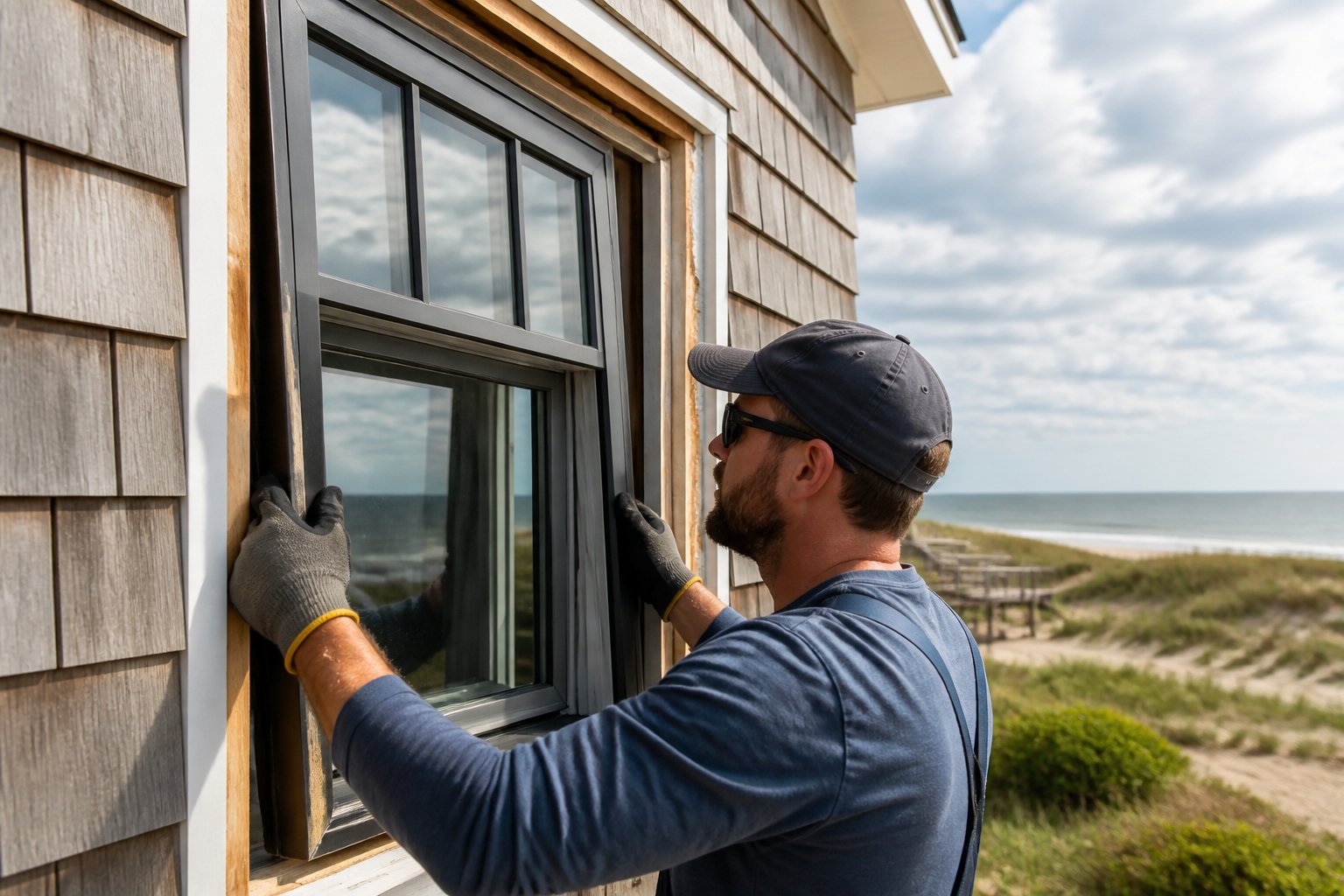
Coastal homes on Hatteras Island and Ocracoke face constant exposure to salt air, wind-driven rain, and intense UV radiation that can break down standard window materials within years. The right frame material, glass package, and hardware determine whether your windows will perform through multiple hurricane seasons or require costly repairs.
The Best Window-Frame Materials for Outer Banks Conditions
Vinyl frames resist salt corrosion and require minimal maintenance, making them popular in Rodanthe, Waves, and Salvo. They won’t rot, peel, or require painting. However, cheaper vinyl can become brittle under constant sun exposure and may expand or contract in extreme temperature swings.
Fiberglass frames offer superior strength and stability in coastal winds. They handle humidity better than wood and won’t corrode like some metal frames. Window replacement companies on the Outer Banks often recommend fiberglass for oceanfront properties in Buxton and Frisco because it maintains its structural integrity through repeated storm exposure.
Wood frames with proper protection can work in less-exposed soundside homes. You’ll need clad or aluminum-wrapped exteriors to shield the wood from moisture. Wood requires regular maintenance but provides excellent insulation.
Composite materials blend wood fibers with polymers for durability. They resist rot and insect damage while offering better energy performance than standard vinyl.
Glass, Hardware and Performance Features Homeowners Should Consider
Impact-resistant glass uses laminated construction with a polymer interlayer that holds shattered glass in place during storms. Oceanfront homes in Avon and Hatteras Village benefit from this protection against wind-borne debris. Some coastal impact window systems are engineered specifically for hurricane zones.
Low-E coatings reflect heat while allowing light through, reducing cooling costs during long coastal summers. Multiple panes with argon or krypton gas fills improve insulation.
Stainless steel or marine-grade hardware prevents rust and corrosion from salt air. Standard hardware fails quickly on Ocracoke and exposed Hatteras locations. Look for multi-point locking systems that distribute wind load across the frame.
Proper flashing and sealants matter as much as the window itself. Wind-driven rain on Hatteras Island penetrates gaps that would stay dry inland. Your installer should use marine-grade sealants and integrate flashing with your home’s water management system to prevent leaks behind the siding.
Tailoring Window Systems to Location on the Coast
Homes on Hatteras Island and Ocracoke face different levels of exposure to salt air, wind-driven rain, and coastal storms depending on their position relative to the ocean and sound. Your location determines which window features and materials will perform best.
Oceanfront, Soundside and Less-Exposed Homes May Need Different Window Systems
Oceanfront properties in Rodanthe, Buxton, and Hatteras Village take the full force of Atlantic storms and constant salt spray. You need windows rated for the highest wind loads and impact resistance, with corrosion-resistant hardware and multiple layers of weather sealing.
Soundside homes in areas like Frisco and Waves face gentler conditions but still deal with high humidity and periodic storm surge. Your windows should prioritize moisture management through proper flashing and drainage channels.
Properties set back from the water in Avon, Salvo, and Ocracoke village can sometimes use less aggressive protection. You still need windows built for coastal humidity and UV exposure, but you may not require the same impact ratings as oceanfront installations.
Product Options for Coastal Replacement
Homes on Hatteras Island and Ocracoke face constant exposure to salt air, wind-driven rain, and intense sunlight. The right window products combine materials and glass designed to withstand these conditions while keeping moisture and air out.
Andersen and Pella Options for Coastal Replacement Projects
Both Andersen and Pella manufacture windows built specifically for coastal environments. These brands offer fiberglass and vinyl frames that resist corrosion from salt spray better than wood or aluminum.
Andersen’s coastal lines include reinforced frames and upgraded weatherstripping to handle the wind loads common in oceanfront locations like Rodanthe and Buxton. Pella’s coastal products feature multi-chamber frames that improve structural performance during storms. Both manufacturers provide glass packages with low-E coatings that block UV rays while reducing heat gain from strong sunlight.
Your choice between brands often depends on frame material preference and aesthetic needs. Fiberglass frames offer the highest strength-to-weight ratio and minimal expansion in humid conditions. Vinyl frames cost less and require no painting, making them popular for soundside homes in Avon and Frisco where salt exposure is moderate. The installation quality matters as much as the product itself—proper flashing, marine-grade fasteners, and flexible sealants prevent water intrusion that can damage walls and sills over time.
Impact-Resistant Glass Versus Standard Coastal-Rated Windows
Impact-resistant glass contains a laminated layer that holds fragments together when struck by debris during hurricanes. Standard coastal-rated windows use tempered or insulated glass designed for wind pressure but lack the impact protection.
Oceanfront properties in Hatteras Village and Ocracoke face higher storm risk than homes tucked behind dunes or on the soundside. Impact glass reduces the chance of window failure when flying objects strike the surface during severe weather. The laminated construction also improves sound dampening and blocks more UV radiation than standard insulated units.
Standard coastal-rated products work well for less-exposed locations if they meet the wind-load requirements for your specific zone. They cost less than impact-resistant options while still managing humidity and coastal winds effectively. You’ll need to consider your home’s position relative to the ocean, surrounding vegetation, and exposure to open water when choosing between these glass types.
Installation and Water Management Essentials
The window you choose matters less than how it’s installed in Hatteras Island’s extreme coastal environment. Wind-driven rain, salt spray, and storm surge demand flawless water management around every opening.
Why Proper Flashing, Sealants, Fasteners and Water Management Matter as Much as the Window Itself
Your replacement window in Buxton or Ocracoke will fail early if water gets behind the frame. Coastal winds push rain horizontally during storms, forcing moisture into gaps that would stay dry inland.
You need pan flashing at the sill, head flashing above the window, and properly lapped side flashing. Each piece must integrate with your home’s weather barrier. Windows and doors installation specialists in the Outer Banks emphasize that the same water management skills used for roofing apply to window openings.
Critical installation elements for Hatteras Island homes:
- Sill pan flashing – Creates a waterproof trough under the window
- Back dam – Prevents water from running inward
- Marine-grade sealants – Resist salt air degradation
- Corrosion-resistant fasteners – Stainless steel or hot-dipped galvanized
- Proper shimming – Prevents frame racking in high winds
Oceanfront homes in Rodanthe and Avon face more severe exposure than soundside properties in Hatteras Village. Your fastener spacing and sealant choice should reflect your specific location’s wind and water exposure.
Recognizing Window Performance Issues
Windows on Hatteras Island and Ocracoke face constant assault from salt air, wind-driven rain, and coastal storms that reveal weaknesses faster than typical inland conditions. Problems that might take years to appear elsewhere can develop in months when your home sits near the ocean or sound.
Signs Existing Windows May Be Failing
You’ll notice condensation forming between glass panes when the seal has failed, allowing moisture to penetrate the insulated glass unit. This happens frequently in coastal areas where salt air accelerates seal degradation.
Visible damage indicators include:
- Water stains on window frames or adjacent walls
- Peeling paint around the exterior trim
- Visible gaps between the window frame and siding
- Difficulty opening or closing sashes
- Corroded hardware or fasteners
Wind-driven rain hitting your oceanfront home in Rodanthe or Buxton can expose failed flashing and sealants around window openings. You might see water intrusion during nor’easters that wasn’t present when the windows were new.
Drafts around closed windows signal air leakage that increases energy costs. Your soundside home in Frisco or Hatteras Village experiences high humidity that makes failed seals and poor weatherstripping especially problematic for indoor comfort.
Considerations for Second Homes and Rentals
Properties on Hatteras Island and Ocracoke that aren’t occupied year-round face unique window challenges. Rental homes need impact-resistant options that can withstand guest use and reduce maintenance calls, while second homes left vacant for months require windows that can handle salt air and humidity without regular monitoring.
Special Considerations for Second Homes and Rental Properties
If you own a rental property in Rodanthe, Buxton, or Ocracoke, you need windows that can handle heavy use from guests who may not treat your home as carefully as you would. Vinyl frames resist damage better than wood when occupants accidentally leave windows open during storms. Modern energy-efficient windows and doors with tight seals reduce cooling costs during peak rental season, which can significantly impact your profit margins when running air conditioning for multiple turnovers each week.
Second homes left vacant between visits face different problems. Salt air continues to corrode metal components even when you’re not there. Choose windows with stainless steel or coated hardware that won’t seize up from months of exposure to coastal humidity.
Your oceanfront rental in Waves needs different protection than a soundside cottage in Frisco. Properties facing direct ocean exposure require windows rated for higher wind speeds and salt spray resistance. Install proper flashing and marine-grade sealants during installation to prevent water intrusion when you’re hundreds of miles away and can’t address leaks immediately.
Making the Right Selection for Replacement Windows
Choosing windows for Hatteras Island or Ocracoke means matching your home’s exposure level to products that can handle salt air, wind-driven rain, and strong coastal storms.
How to Choose the Right Replacement Window for a Hatteras Island or Ocracoke Property
Your location determines what your windows need to withstand. Oceanfront homes in Rodanthe, Buxton, or Hatteras Village face the harshest conditions with salt spray, humidity, and wind-driven rain during nor’easters and hurricanes. Soundside properties in Waves or Frisco experience less direct exposure but still need protection from coastal winds and moisture.
Material choices matter based on your setting:
- Vinyl resists salt air corrosion and requires minimal maintenance
- Fiberglass handles extreme temperature shifts and holds up in high humidity
- Wood-clad options work better for less-exposed homes in Avon or Salvo
Impact-rated windows protect against flying debris during storms. You need proper flashing, marine-grade fasteners, and weatherproof sealants regardless of brand. Both Pella and Andersen offer coastal-rated products, but the installation quality determines how well your windows perform. Water management details like drainage channels and proper sealing prevent moisture intrusion that damages walls and framing in Ocracoke’s humid climate.
Conclusion: The Importance of Matching Windows to Coastal Exposure and Construction
Your home’s location on Hatteras Island or Ocracoke determines what kind of windows you need. An oceanfront property in Rodanthe faces different challenges than a soundside home in Frisco or a sheltered location in Hatteras Village.
Salt air, wind-driven rain, and storm exposure vary widely across the Outer Banks. A house directly on the beach in Waves needs windows that perform well in coastal storm zones with the highest impact ratings and corrosion-resistant materials. A home set back from the water in Avon or Buxton may need less aggressive protection but still requires coastal-rated products.
Key factors that determine your window needs:
- Distance from the ocean or sound
- Elevation and wind exposure
- Direction your home faces
- Historical storm damage in your area
The right frame material matters too. Coastal windows and doors must resist humidity, salt spray, and intense sunlight. Both Andersen and Pella offer coastal-rated options, but the installation quality matters just as much as the product itself.
Proper flashing, fasteners, and sealants protect your investment. Water management details keep moisture out during wind-driven rain events. Working with an installer who understands these requirements ensures your windows last in Salvo, Ocracoke, or anywhere else on the islands.
Matching the frame material and hardware to your level of exposure makes the difference between windows that last and ones that fail early.
Frequently Asked Questions
Homeowners on Hatteras Island and Ocracoke need clear answers about replacement windows that can handle ocean spray, humidity, and coastal storms. Costs vary based on materials and exposure levels, while installation quality matters just as much as the windows themselves.
How much does it typically cost to replace windows in a home in coastal North Carolina?
Window replacement costs on Hatteras Island and Ocracoke depend on the materials you choose and how exposed your home is to the elements. Oceanfront homes in Rodanthe or Buxton need stronger products than houses set back from the beach.
You’ll pay more for impact-rated windows and proper installation that includes corrosion-resistant fasteners and advanced flashing systems. Salt air and wind-driven rain require better sealants and water management details than inland homes need.
Your final price also reflects the size and number of windows, the frame material, and whether you need custom sizes. Getting detailed quotes helps you understand what you’re paying for.
What is the average total price to replace 12 windows in a single-family house?
The total price for 12 windows varies widely based on your home’s location and the materials you select. A soundside home in Avon faces different conditions than an oceanfront property in Waves.
You need to factor in the cost of windows built to handle coastal winds and humidity. Installation quality matters significantly on Hatteras Island and Ocracoke, where improper flashing can lead to water damage.
Windows installation services in the Outer Banks offer different pricing structures. Make sure quotes include all installation materials like proper sealants and weather-resistant fasteners.
Which window frame materials hold up best against salt air, wind, and humidity near the coast?
Vinyl and fiberglass frames resist salt air corrosion better than most other materials on Hatteras Island and Ocracoke. These materials don’t rot, rust, or require regular painting in humid coastal conditions.
Aluminum frames need special coatings to prevent corrosion from ocean spray. Wood frames require consistent maintenance to survive the moisture and strong sunlight in places like Frisco and Hatteras Village.
Fiberglass handles temperature changes well and resists expanding or contracting in coastal humidity. Vinyl offers good performance at a lower cost, though it can become brittle under prolonged UV exposure from strong coastal sunlight.
How do I choose impact-rated or hurricane-rated windows for a coastal home?
Impact-rated windows use laminated glass that holds together when struck by debris during coastal storms. You need these on oceanfront properties in Rodanthe, Salvo, or Ocracoke where storm exposure is highest.
Storm-rated installations keep wind and water out during hurricanes through proper sealing and flashing. Your installer must use corrosion-resistant fasteners and advanced sealants designed for wind-driven rain.
Soundside homes may not need the same level of protection as oceanfront properties, but you still face coastal winds and humidity. Talk with installers about your specific exposure level to match the product to your location.
What time of year tends to offer the best pricing or promotions on window replacement?
Fall and winter months often bring better pricing on Hatteras Island and Ocracoke when demand drops after summer. Installers may offer promotions during slower periods.
You need to balance savings with installation timing since some sealants and materials work best in specific temperature ranges. Schedule your project when weather allows proper curing of sealants in the humid coastal climate.
Booking early lets you choose your preferred installation date before the busy season starts. This matters when you need experienced installers who understand coastal flashing and water management requirements.
How can I compare quotes from window installers to avoid hidden fees and ensure quality work?
Ask each installer to break down costs for materials, labor, flashing systems, and sealants separately. You need to see what fasteners and water management products they plan to use in salt air conditions.
Verify that quotes include proper flashing details for wind-driven rain on Hatteras Island and Ocracoke. Cheap installations that skip corrosion-resistant fasteners or advanced sealants lead to problems in coastal humidity.
Compare how each installer plans to handle water management around your windows. Companies specializing in Outer Banks installations should explain their specific approach to coastal conditions without you having to ask. Look for detailed explanations about materials rated for salt air, not just generic window specifications.
