
Living near the ocean means dealing with strong winds, salty air, and the chance of flying debris during a storm. Standard patio doors aren’t built for that kind of pressure, which is why building codes in many coastal areas call for something stronger.
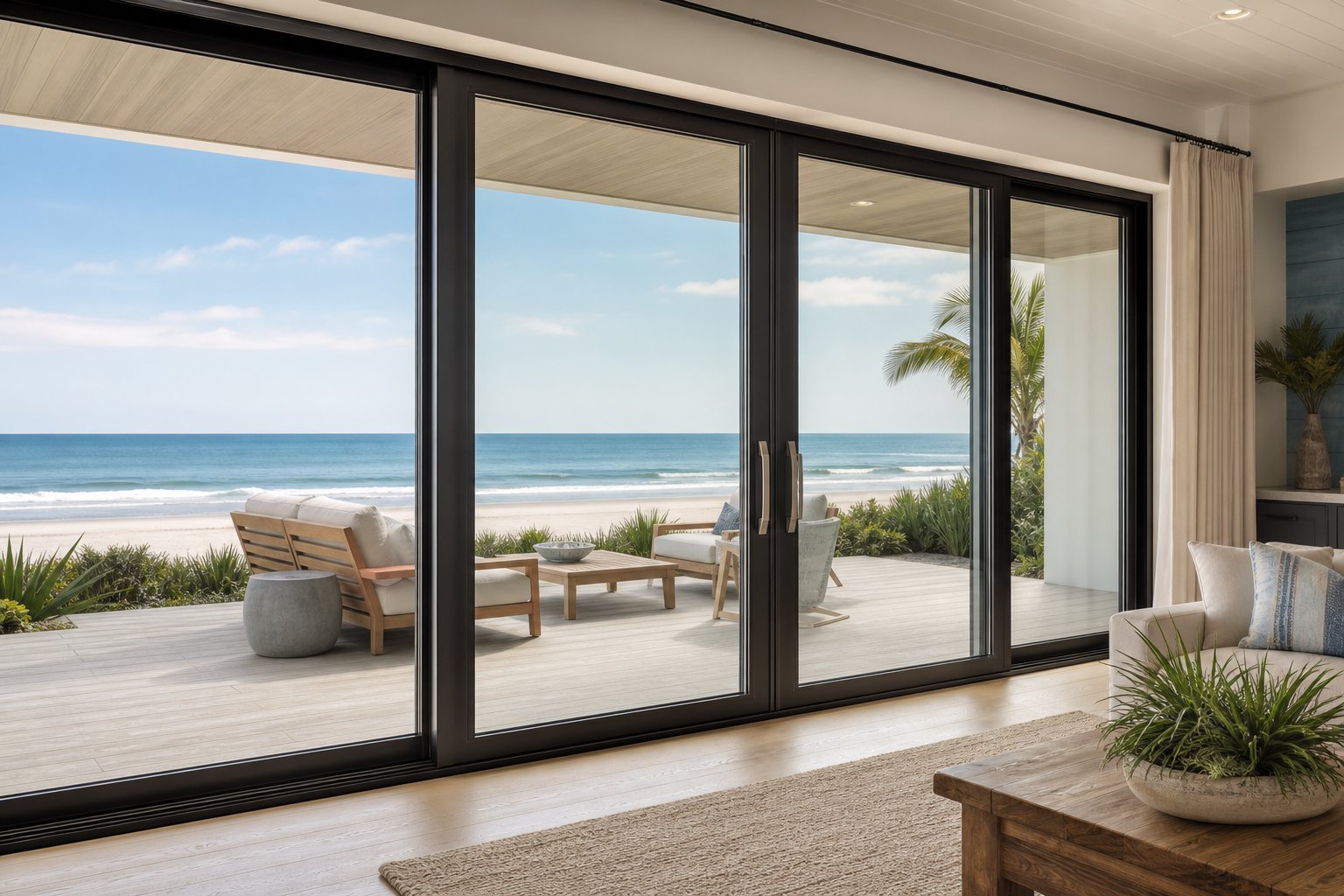
Impact-rated patio doors are doors that have passed both impact testing and performance grade testing, meaning they use laminated glass and reinforced hardware to resist wind-borne debris and pressure changes during a hurricane. Manufacturers like Andersen and Pella offer sliding, hinged, and French styles that meet these standards, so you don’t have to give up the look you want.
Choosing the right door for your home depends on where you live, what your local code requires, and how much glass you want. Below, you’ll find how impact ratings work, what separates one glass type from another, and which options make sense for coastal homes.
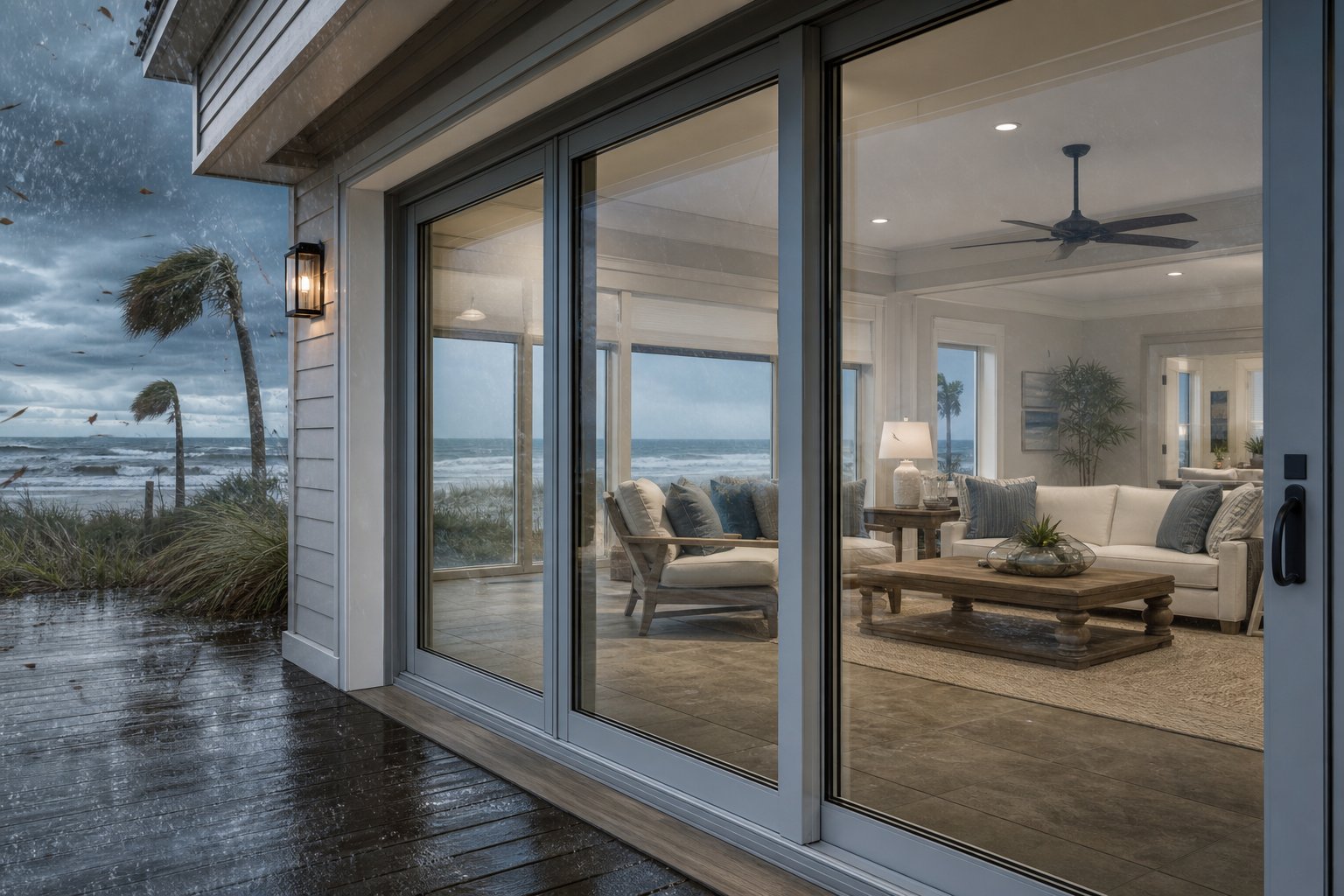
Impact-rated patio doors work in two ways: they stop flying debris from breaking through, and they hold up under the pressure changes a storm creates. The glass, frame, and hardware all play a part, and the same features that block a storm also help with noise and security on normal days.
Windborne Debris and Pressure Protection
To earn an impact rating, a patio door has to pass two separate tests. The first test fires a 2×4 wood missile from an air cannon at the door at set speeds and target points.
The glass can crack, but the piece of lumber cannot pass through to the inside. The second test puts the door through thousands of pressure cycles that copy the push and pull of hurricane winds.
This is where reinforcement matters most. Impact-resistant patio doors also carry a Performance Grade (PG) rating, which measures air, water, and structural resistance.
Higher numbers mean more resistance to pressure. For example, Andersen A-Series gliding and hinged patio doors with Stormwatch protection are certified from PG45 to PG65, with upgrades reaching PG70 depending on size and configuration.
Reinforced frames, extra locking points, and heavier hardware keep the panel anchored in the opening so wind pressure does not force it out of the track.
Why Laminated Glass Holds the Opening Together
Laminated glass is the core of any impact patio door. Two panes of glass are bonded to a clear plastic interlayer, which grips the glass fragments when something strikes it.
That is the key difference from tempered glass. Tempered glass breaks into small pieces and leaves the opening wide open.
Laminated glass stays in the frame, even when cracked. Keeping the opening sealed prevents wind from rushing inside and pressurizing the house, which is what pushes out walls and lifts roofs during a storm.
You have two options:
| Glass Type | How It’s Built | Best Use |
|---|---|---|
| Monolithic laminated | Two panes with a laminate interlayer | Applications where additional insulated-glass performance is not required |
| Dual-pane laminated | Laminated glass inside, a third pane outside, air space between | Areas needing energy efficiency ratings alongside impact protection |
Everyday Benefits Beyond Hurricane Protection
Storms are occasional. The rest of the year, laminated glass still earns its keep.
The plastic interlayer dampens sound waves, so you get noticeable noise reduction from traffic, boat motors, lawn equipment, and neighbors. This matters on lots close to a road or a busy waterfront.
Break-in resistance is another practical gain. An intruder cannot clear the glass out of the frame with one hit, and the added locks on impact-resistant windows and doors slow forced entry.
Laminated glass also blocks most UV light, which helps reduce fading in flooring, furniture, and artwork near the door. One more point: you skip the shutters.
With impact-resistant glass already installed, there is no plywood to cut or panels to store before a storm.
Meeting Coastal Building and Hurricane Zone Requirements
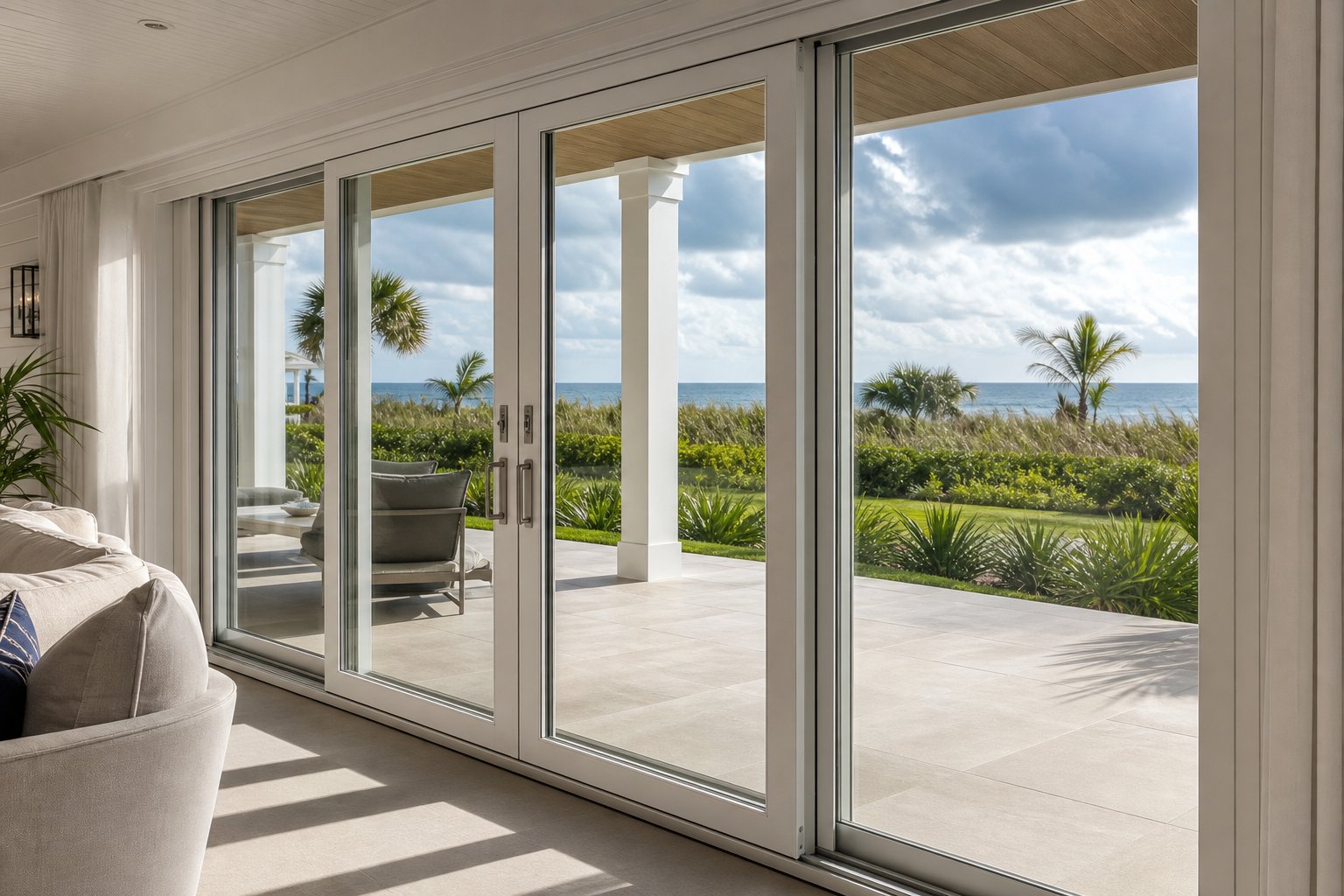
Where you live decides how strong your patio door needs to be. Coastal building codes set the rules for Ocracoke Island, Hatteras Island, and the Outer Banks of North Carolina.
Understanding Design Pressure and Product Approvals
Design Pressure (DP), also called Performance Grade (PG), measures how much wind pressure a door can handle without failing. A higher number means more strength.
Impact-resistant doors must also pass two tests: a large missile test, where a 2×4 is fired at the glass, and thousands of pressure cycles. Before you buy, check the paperwork:
| What to Look For | Why It Matters |
|---|---|
| DP/PG rating | Must meet or beat your local wind load |
| Permanent label on the frame | Inspectors use it to verify compliance |
Ratings change with door size and setup, so a wide slider may carry a lower rating than a smaller one. Ask your local building official for the exact numbers your address requires, since the same rules apply to coastal windows and impact-resistant windows on the same house.
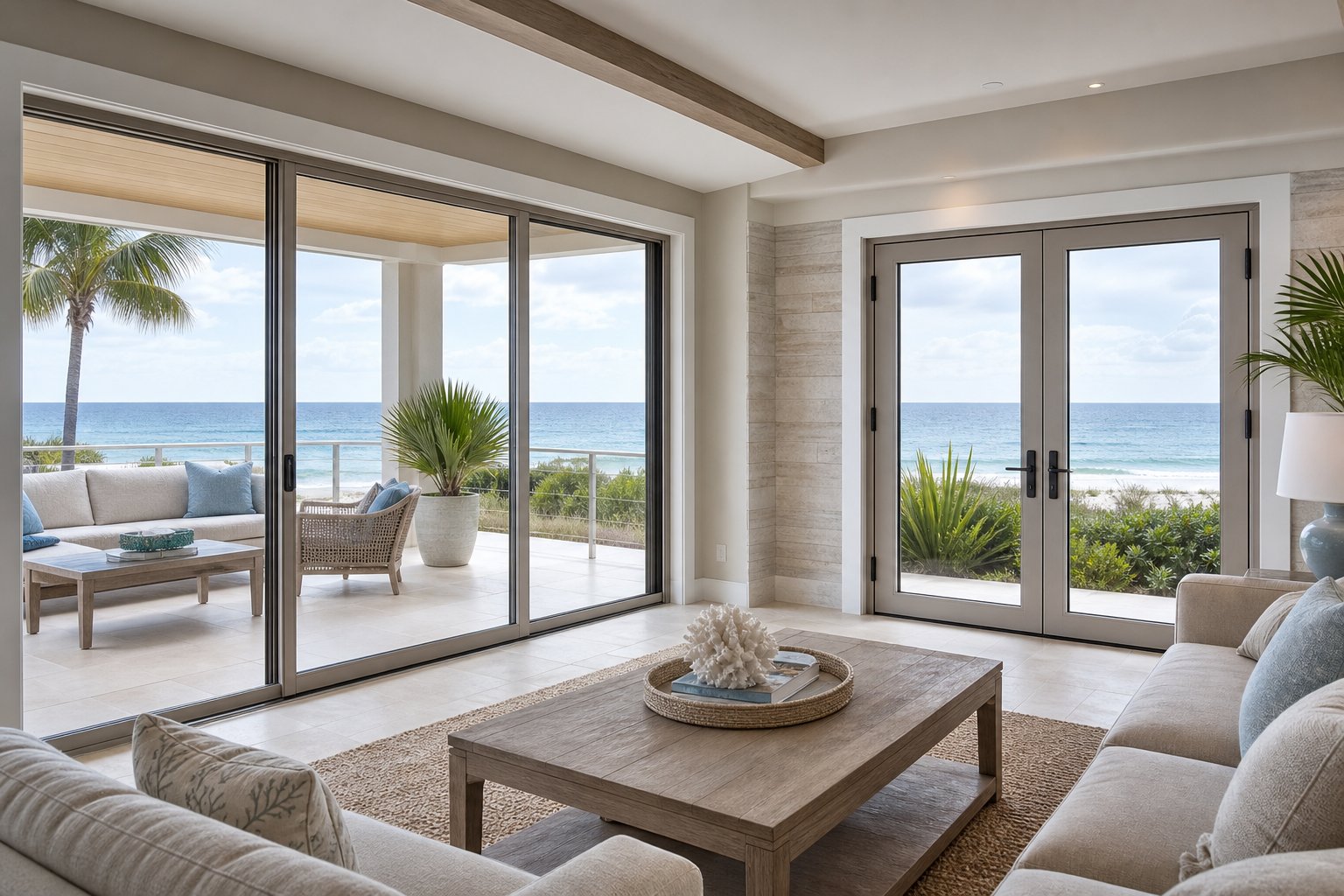
Sliding and hinged patio doors both come in impact-resistant versions, but they handle space, airflow, and pressure loads differently. Your choice affects how much room you need inside, how the door seals during a storm, and which locking hardware you can add.
When Sliding Patio Doors Are the Best Fit
Sliding patio doors, sometimes called gliding doors, move along a track instead of swinging open. That makes them a good pick when furniture, a walkway, or a narrow deck sits right next to the opening.
Sliding units also work well for wide openings. Two-, three-, and four-panel setups let you fill a large wall with glass while keeping the frame count low.
For coastal use, look for a sliding door tested for both impact and pressure cycling. Keep in mind that only part of a sliding door opens.
In a two-panel unit, you get about half the width as clear passage.
Benefits of Hinged Patio Doors
Hinged patio doors swing on side jambs, so the full panel width opens. A French door style, which has wide stiles and a tall bottom rail, is one common version.
Swinging panels press into weatherstripping when closed, which often helps with air and water resistance. Andersen’s A-Series Frenchwood Hinged Patio Door with Stormwatch protection carries PG ratings from PG50 to PG65 depending on size and layout.
You do need clear floor space for the swing path. Outswing versions save interior room and are common in coastal builds because wind pressure pushes the panel tighter against the frame.
Hinged doors also give you more hardware choices, including multi-point locks and traditional handle sets.
Security Features for Large Glass Openings
Impact-resistant doors use laminated glass, which has a clear plastic layer bonded between glass panes. If the glass cracks, the layer holds the pieces in place, which slows down forced entry and reduces flying shards.
Beyond the glass, check for these hardware details:
| Feature | What it does |
|---|---|
| Multi-point locking | Secures the panel at several spots along the frame, not just one |
| Reinforced frames | Hidden metal or composite members resist bending under pressure |
| Anti-lift blocks | Stop a sliding panel from being pried out of its track |
| Laminated glass | Holds broken glass together and helps cut outside noise |
Ask for the product’s Performance Grade rating and its impact approval number. Those two figures tell you what the door was tested to handle, and your local code official can confirm what your address requires.
Impact-rated sliding patio doors move along a track instead of swinging open. That single design choice shapes most of their strengths and weaknesses in a coastal setting.
Where sliding doors work well:
- Large glass views. Wide panels give you a broad sightline to the water or dunes with minimal frame in the way.
- No swing space needed. The panel slides past its partner, so furniture on your deck or inside the room stays where it is.
- Full-height screens. Most sliding units accept a sliding screen, which is harder to do with some other door styles.
- Easy deck access. A low sill and wide opening make trips to the grill or pool simple.
Where they need attention:
Sand and salt collect in patio door tracks. When grit builds up, the patio door rollers wear faster and the door starts to drag.
Sill drainage matters just as much. Weep holes carry wind-driven rain out of the frame, and clogged holes can let water back up into the sill.
Ask for corrosion-resistant patio door hardware — stainless steel rollers, locks, and fasteners hold up better within a few miles of the ocean. Sliding patio door maintenance is straightforward: vacuum the track a few times a year, clear the weep holes, and check that the rollers still glide smoothly.
Hurricane-rated sliding doors suit wide openings, second-story decks, and rooms where space is tight. For Outer Banks homes and similar barrier island locations, confirm the door carries the design pressure rating your local code requires.
Impact-rated Frenchwood hinged patio doors give you the look of classic French doors with the strength coastal homes need. Andersen Frenchwood hinged patio doors are one of the better-known options in this category, though other manufacturers build similar impact-rated French doors.
These doors swing open like standard entry doors. Most setups use an active panel you use every day and a passive panel that stays shut until you need the full opening.
Why Coastal Homeowners Choose Them
- Wider clear opening. Open both panels and you get a much bigger path for furniture and foot traffic than a slider allows.
- Traditional appearance. The wood interior and grille patterns suit older Outer Banks cottages and shingle-style homes.
- Multipoint locking system. Several bolts engage at once along the frame, which improves both security and the seal against wind-driven rain.
- Corrosion-resistant hardware. Coastal versions often use stainless steel components and tougher finishes to slow salt corrosion.
Trade-Offs to Consider
Swing clearance is the main drawback.
Inswing patio doors eat into your interior floor space, while outswing patio doors need a clear deck or porch and can be harder to screen.
Thresholds sit slightly higher than on some sliders, so check accessibility needs.
Weatherstripping also needs occasional inspection, since hinged doors have more moving joints than a single sliding panel.
| Feature | Best Fit |
|---|---|
| Inswing | Covered porches, deep decks |
| Outswing | Tight rooms, high wind exposure |
Choose this style when appearance matters and you have room for the panels to swing.
Sliding vs. Hinged Impact Patio Doors
Both styles can be impact rated, but they behave differently in a coastal home.
Sliding (gliding) doors move along a track, so panels never swing into your room or onto the deck.
That makes them a good fit for tight patios, condos, and rental units where furniture placement matters.
Hinged doors, including Frenchwood® French door styles, swing open for a wider clear opening and a more traditional look.
You need space for the panel to swing, and outswing versions often perform better against wind-driven rain.
| Feature | Impact Sliding Door | Impact Hinged / French Door |
|---|---|---|
| Space needed | None to open | Room for panel swing |
| Views | Wider glass, fewer frame lines | Wider stiles and rails |
| Clear opening | About half the width | Nearly full width |
| Operation | Glide on rollers | Swing on hinges |
| Screens | Sliding insect screen | Retractable or hinged screen |
| Hardware | Multi-point locks, upgraded rollers | Multi-point locks, heavier hinges |
| Maintenance | Keep track clean of sand and salt | Check hinges, seals, and alignment |
Performance notes: Andersen A-Series gliding and hinged doors with Stormwatch® protection carry PG45 to PG65 certifications, with upgrades reaching PG65 to PG70 depending on size and configuration.
For a vacation rental, sliding doors reduce wear and take less coaching for guests.
For a primary home, hinged doors give you the larger opening and hardware many owners prefer.
Two doors can both carry an impact rating and still perform very differently after ten years near salt air.
The differences usually come down to frame construction, hardware quality, and the type of glass sealed inside the panels.
Reinforced Frames, Tracks, and Interlocking Panels
Impact-resistant doors carry more weight than standard patio doors, so the frame has to do more work.
Look for hidden reinforcements inside the frame and panels.
Steel or aluminum inserts help the door hold its shape under wind pressure instead of flexing away from the seals.
Material matters too.
Composite and fiberglass exteriors resist corrosion better than raw aluminum in coastal settings, and vinyl won’t rust.
For sliding units, check the track.
Heavier rollers and a deeper track keep panels moving smoothly under load, and a drainage channel in the sill moves water out instead of holding it against the frame.
Interlocking panels are another detail worth asking about.
Where two sliding panels meet, an interlock hooks them together so wind can’t push one panel past the other.
Locks, Hardware, and Anti-Lift Protection
Most impact-rated doors reach higher Performance Grade ratings partly through hardware upgrades, not just stronger glass.
Here’s what to look for:
- Multi-point locks — engage the frame at several spots along the height of the door instead of one center point
- Anti-lift devices — small blocks or pins that stop someone from lifting a slider off its track
- Reinforced internal brackets — spread pressure loads across the frame
- Stainless steel components — screws, hinges, and rollers made from 304 or 316 stainless hold up better in salt air
Hinged and French doors need attention at the top and bottom.
Flush bolts or shoot bolts that lock into the head and sill keep the inactive panel from bowing inward during a storm.
Ask what finish is used on exposed hardware.
Powder-coated or PVD finishes last longer than plated hardware within a mile of the ocean.
Glass Options for Comfort, UV Control, and Sound
Impact-resistant glass is laminated, meaning a clear plastic interlayer bonds two panes together.
When the outer pane breaks, the interlayer holds the pieces in place so debris doesn’t enter the home.
You’ll choose between two builds:
| Glass Type | Construction | Best For |
|---|---|---|
| Monolithic laminated | Two panes with an interlayer | Warm climates where insulation value matters less |
| Dual-pane laminated | Laminated unit plus an outer pane with an air space | Areas needing an energy rating or air conditioning savings |
Low-E coatings reduce solar heat gain and block a large share of UV rays, which slows fading on floors and furniture.
Check the NFRC label for U-Factor and Solar Heat Gain Coefficient numbers.
Laminated glass also offers noise reduction.
The interlayer dampens sound, so traffic and wind noise come through more quietly than with standard insulated glass.
Picking an impact-rated patio door means matching the product’s tested ratings to your home’s wind zone and distance from the water.
Compare frame materials, glass packages, and door styles.
Installation quality and paperwork matter just as much, because an approved door installed the wrong way may not perform as tested or pass inspection.
Choosing the Right Patio Door for an Outer Banks Home
Homes on the Outer Banks face salt spray, blowing sand, and design wind pressures that change from the soundside to the oceanfront.
Start by finding out which wind zone your lot falls in, local Outer Banks building officials enforce the applicable North Carolina Building Code requirements for coastal properties.
Ask for the door’s design pressure (DP) rating and its missile impact level.
Large-missile testing is standard for doors within 30 feet of grade.
Corrosion resistance deserves attention too.
Look for stainless steel or coated hardware, and finishes rated for seacoast exposure, such as fiberglass frames tested against UV and salt air.
If your home sits on pilings with wide decks, consider how often the door will be used.
High-traffic gliding doors need rollers and tracks built for sand and repeated cycles.
Andersen and Pella Impact-Rated Patio Door Options
Both major manufacturers offer coastal lines with laminated glass and reinforced frames.
| Line | Material | Notable Features |
|---|---|---|
| Pella Hurricane Shield Series | Vinyl | Laminated glass standard, pre-drilled installation holes, argon-filled insulating glass |
| Pella Impervia | Fiberglass | Powder-coat finish meeting AAMA 624, tested for extreme heat, sub-zero cold, and seacoast conditions |
| Andersen impact-resistant series | Wood, composite, vinyl | Stormwatch protection packages, laminated glass, coastal hardware finishes |
Pella’s Hurricane Shield laminated glass also blocks about 99.7% of UV rays and reduces outside noise compared to non-laminated glass.
Andersen’s gliding patio doors pair large glass areas with slim frames, which works well when you want an unobstructed view of the dunes or sound.
Request the exact product approval number for the size and configuration you plan to buy, not just the product family.
Why Full-Frame Patio Door Installation Matters
An impact-rated door is only as strong as its connection to the house.
Full-frame installation removes the old unit down to the rough opening, which lets the installer inspect the framing, header, and subfloor for rot or storm damage before setting the new door.
Coastal moisture often hides behind trim.
Sills near decks and thresholds are common failure points, and you cannot check them during a retrofit that leaves the old frame in place.
Full-frame work also allows proper flashing, sill pans, and a continuous seal to the water-resistive barrier.
That is what keeps wind-driven rain out during a storm.
Anchoring is the other reason.
Manufacturer instructions specify fastener type, spacing, and embedment depth, and those requirements assume you can reach the structural framing.
Match Ratings to the Home’s Location and Exposure
Other coastal building codes across the Southeast and Gulf follow ASTM E1886 and E1996 for impact and cyclic pressure testing.
Three factors drive the rating you need:
- Basic wind speed for your address, from the code’s wind maps
- Exposure category, which reflects nearby terrain and open water
- Height above grade, which determines small-missile versus large-missile testing
A door approved for a less-exposed inland location may not meet the requirements for an Outer Banks property.
Confirm the number with your local building department before ordering.
Compare Materials, Sizes, and Opening Configurations
Frame material affects maintenance, thermal performance, and how large the door can be while holding its rating.
- Vinyl — low maintenance, no repainting, good value; limited color options and larger frame profiles
- Fiberglass — dimensionally stable, holds finish well in salt air, handles wide temperature swings
- Aluminum — strong and sl
Salt air, wind-driven sand, and heavy rain wear on patio doors faster in coastal areas than they do inland.
A simple cleaning schedule, a post-storm checklist, and clear signs that a door has reached the end of its service life will help you protect the money you spent on impact-resistant patio doors.
Routine Care for Tracks, Seals, and Drainage
Sliding patio doors depend on clean tracks.
Grit builds up quickly near the shore, and it grinds down rollers and makes the panel hard to move.
Vacuum the track every month, then wipe it with a damp cloth.
Skip oil-based lubricants, which trap sand.
Use a dry silicone spray or a product your manufacturer recommends.
Check the weep holes at the bottom of the frame.
These small openings drain water out of the sill, and when they clog, water backs up against the panel and sill.
Rinse the exterior frame with fresh water every one to three months to remove salt.
Andersen and Pella both note that coastal exposure calls for more frequent cleaning than standard installations.
Look at the weatherstripping and glazing seals twice a year.
Compressed, brittle, or torn seals let in air and water and should be replaced.
Inspecting Glass, Frames, and Hardware After Storms
After a strong storm, walk both sides of the door and look closely.
Glass: Laminated impact glass can crack while the plastic interlayer holds the pieces in place. That means the door may look intact but no longer performs as designed.
Watch for spider-web cracks, chips at the edges, or a cloudy, milky look between panes, which points to a failed seal.
Frames: Check for dents, bowing, or separation at the corners. On aluminum frames, look for white pitting or bubbling under the finish, both signs of corrosion.
Hardware: Test every lock point. Multipoint locks and reinforced handles are part of the door’s structural rating, so a bent or loose lock reduces its performance.
Anchors and sealant: Look for cracked caulk, gaps at the perimeter, or water stains on the interior floor and trim.
Document any damage with photos before repairs. Insurance claims often require them.
When an Existing Patio Door Should Be Replaced
Repair makes sense for rollers, weatherstripping, handles, and single glass panels.
Replacement makes more sense in these situations:
| Situation | Why replacement is the better choice |
|---|---|
| Non-impact door in a hurricane zone | Older doors can’t be retrofitted to meet current impact and pressure requirements |
| Frame corrosion or rot | The anchoring system loses strength, and the door can’t be secured properly |
| Cracked laminated glass | The unit no longer performs as tested |
| Repeated water entry after reseals | Usually points to a sill or installation failure, not a seal issue |
| Doors 20 to 30 years old | Codes and performance ratings have tightened significantly since installation |
If you’re replacing, ask for the product’s Performance Grade rating and confirm the requirement with your local building department.
Ratings vary by door size and configuration, so the number on a brochure may not match the unit you order.
Plan replacement outside of hurricane season when possible.
Lead times on impact-rated units run longer, and permit and inspection schedules can add several weeks.
Impact-rated patio doors cost more than standard sliding doors, but they carry testing labels that prove they can take a hit from flying debris.
Below are answers about frame materials, glass construction, and the specific numbers you should check before you buy.
What are the best patio doors for coastal areas?
The best coastal patio doors combine laminated impact glass with a frame material that resists salt air and moisture.
Fiberglass, vinyl, and aluminum with a marine-grade finish all hold up well near the ocean.
Look for product lines built specifically for coastal use.
Pella’s Hurricane Shield Series vinyl doors and Impervia fiberglass doors are both tested for seacoast conditions, and Andersen offers impact-resistant gliding doors that meet coastal performance requirements.
How much do impact-resistant sliding glass doors cost?
Pricing for impact-resistant sliding glass doors varies widely by size, product series, glass package, configuration, site conditions, structural repairs, freight, ferry logistics, and full-frame installation requirements.
What is the best material for hurricane impact doors?
There is no single best material — each one has trade-offs.
- Fiberglass resists warping, handles temperature swings, and holds paint well. Pella’s fiberglass finish meets AAMA 624, a standard for coating durability.
- Vinyl costs less and needs almost no upkeep. Multi-chambered frames add stiffness and help prevent sagging or bowing.
- Aluminum is the strongest per inch of frame, so it allows narrow sightlines and very large glass panels. It needs a thermal break to limit heat transfer.
- Clad wood gives you a wood interior with an aluminum or fiberglass exterior shell.
For large openings that need slim frames, aluminum usually wins.
For low maintenance at a lower price, vinyl and fiberglass are strong choices.
How do impact-rated patio doors perform during hurricanes and high winds?
Impact-rated doors are tested two ways.
First, a large missile test fires a nine-pound piece of lumber at the glass at roughly 34 miles per hour.
Then the door goes through 9,000 cycles of positive and negative pressure to mimic sustained wind loads.
The laminated glass may crack on impact, but the plastic interlayer holds the pieces together.
That keeps the opening sealed.
If wind gets inside your house through a broken door, interior pressure builds fast and can lift the roof or push out walls.
Wind rating is the other half of the equation.
Design pressure, or DP, tells you how much wind load the door can carry, and coastal codes often call for DP 50 or higher depending on your location and the door’s size.
What should homeowners look for when choosing impact-rated patio doors for a coastal property?
Start with the permanent label on the frame. It should list the impact rating, design pressure, and the testing standard, usually ASTM E1886 and E1996.
Then check these details:
- Laminated glass thickness — look for an interlayer of at least 0.09 inches for large missile zones.
- Water penetration resistance — a rating above 6 psf helps during wind-driven rain.
- Corrosion-resistant hardware — select stainless steel or coated hardware specifically designed for coastal environments.
- Flashing and sill pans — ensure proper installation with robust flashing, sill pans, and anchoring systems to prevent water intrusion and provide structural stability.
- Full-frame installation — this method is recommended for Ocracoke Island, Hatteras Island, and the Outer Banks to address potential hidden damage and ensure long-term performance in harsh coastal conditions.
- Product options — Andersen and Pella offer impact-rated sliding and Frenchwood hinged patio doors with coastal hardware packages tailored for the Outer Banks region.
