
Salt air, high winds, and constant humidity put more stress on Outer Banks windows than almost anywhere else in North Carolina. So when you spot a foggy pane, a sticking sash, or rot around the frame, the question comes fast: fix it or replace it?
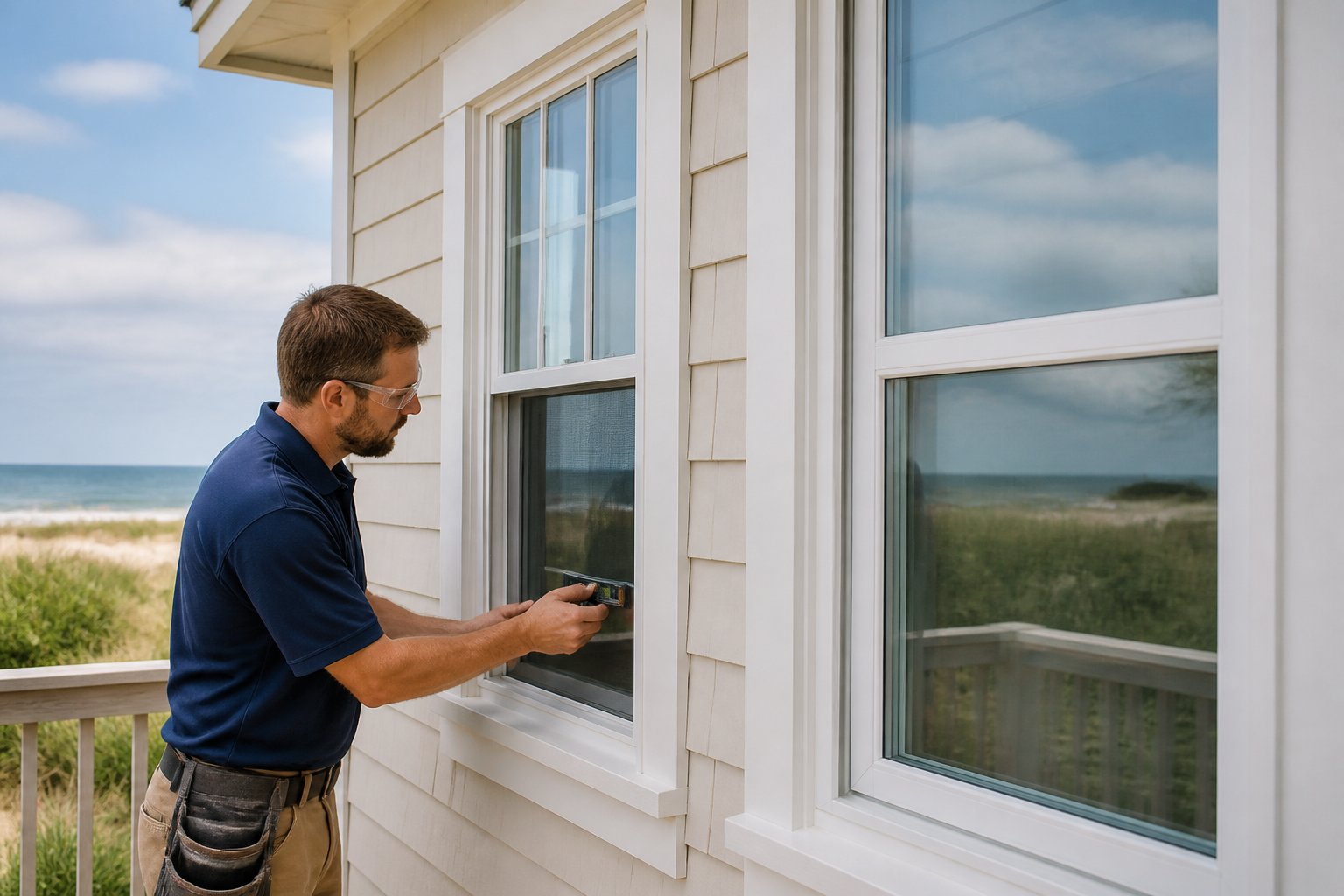
Repair makes sense when the window frame is still solid and the problem is limited to hardware, glass, or seals, while full window replacement is the better choice when frames are rotted, sashes are warped, or your windows can’t hold up to coastal wind and water. A cracked pane or a broken balance can often be handled in a single visit. Widespread rot, drafts you can feel from across the room, and rising energy bills point in the other direction.
The right call also depends on the age and material of your windows and doors, what you plan to do with the property, and how much longer you want to keep patching things. This guide walks you through the signs to look for, what each option typically costs, and how local window installation crews handle the demands of building near the ocean.
How to Decide Between Repair and Replacement
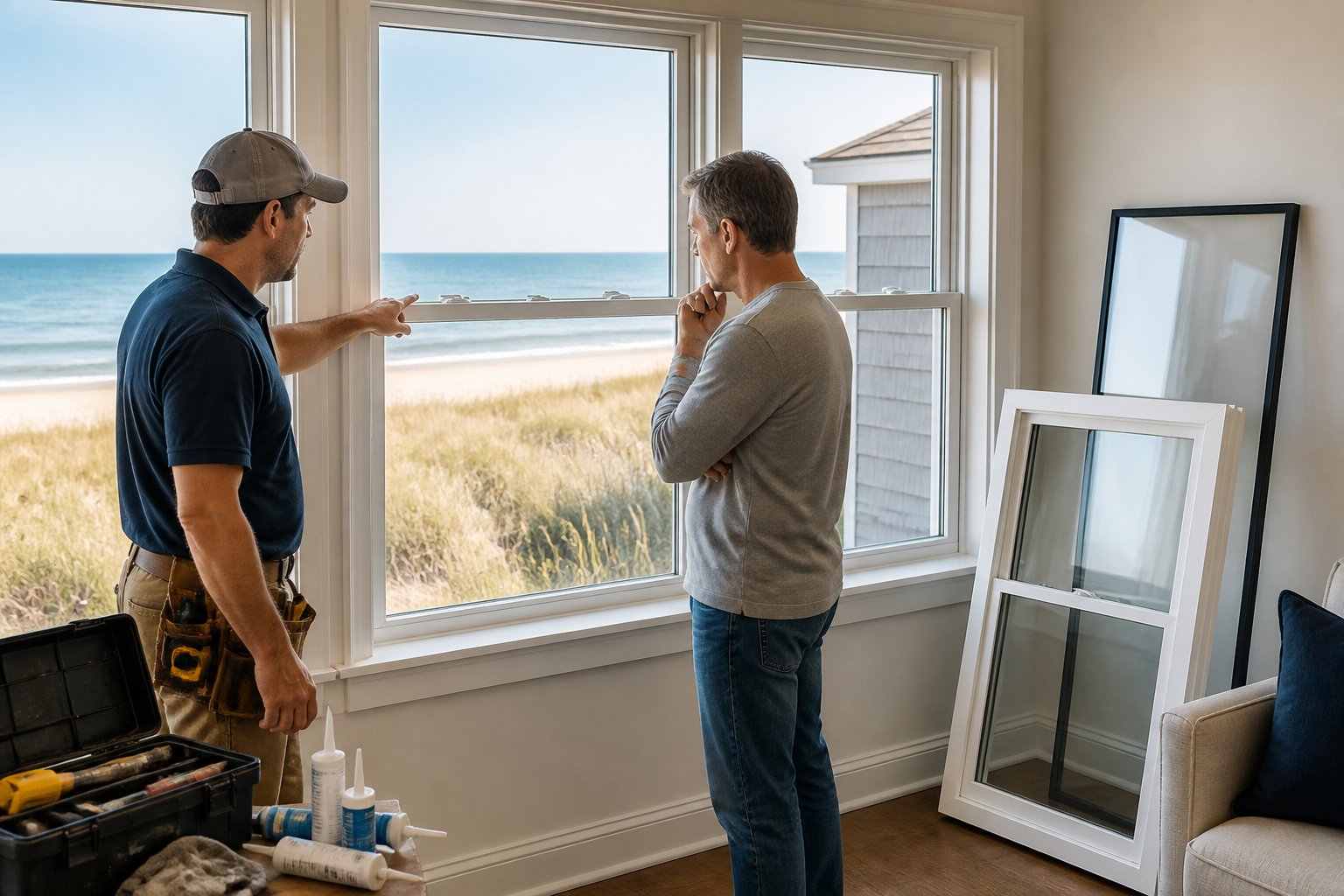
The right choice usually comes down to three things: the age of the window, whether the damage is on the surface or in the structure, and how often the same problem keeps coming back. On the Outer Banks, salt air and wind-driven rain speed up wear, so a small issue can turn into water intrusion faster than it would inland.
When a Targeted Repair Is Usually Enough
Repair makes sense when the window frame is still solid and the problem is limited to one part.
Good candidates for repair include:
- Failed caulk or worn weatherstripping around the frame
- Broken hardware like cranks, locks, balances, or hinges
- A single cracked pane in an otherwise sound sash
- Sticking or misaligned sashes from swelling or settling
- Rotted trim that hasn’t spread into the framing
Most of these fixes run about $100 to $600 per window, depending on parts and access.
Repair is also the smart call if your windows are under 10 to 15 years old and still under warranty. Many manufacturers cover the insulated glass unit separately from the frame, so you may only pay for labor.
When Full Window Replacement Is the Better Investment
Replacement is the better use of your money when the window itself has stopped doing its job.
Consider full window replacement if:
| Situation | Why Repair Falls Short |
|---|---|
| Fog or moisture between the panes | The insulated glass unit’s seal has failed; the gas fill is gone |
| Windows are 20+ years old | Parts are often discontinued and performance keeps dropping |
| Rotted or warped frames | The structure can’t hold a weathertight seal |
| Repeat leaks in the same spot | Repairs treat the symptom, not the cause |
| Single-pane glass on a coastal home | No real energy efficiency gain is possible without new units |
Replacement typically costs $600 to $1,500 or more per window, installed. The payoff shows up in lower cooling bills, quieter rooms, and glass rated for coastal wind and impact standards that older windows can’t meet.
Warning Signs That Require a Professional Inspection
Some symptoms point to problems behind the wall, not just the window.
Call for an inspection if you notice:
- Water stains, soft drywall, or peeling paint below the sill
- A musty smell or visible mold near the window opening
- Daylight visible around the frame, or gaps you can feel from inside
- Nails, screws, or trim backing out of the frame
- Sagging or bowing in the sill or header
These signs often mean water intrusion has reached the sheathing, insulation, or framing. In that case, the fix involves more than the window, and swapping in a new unit over damaged framing will only hide the problem.
A qualified contractor should check the flashing, the water-resistive barrier, and the surrounding wall before quoting you either option.
Repairable Window Problems and Practical Fixes
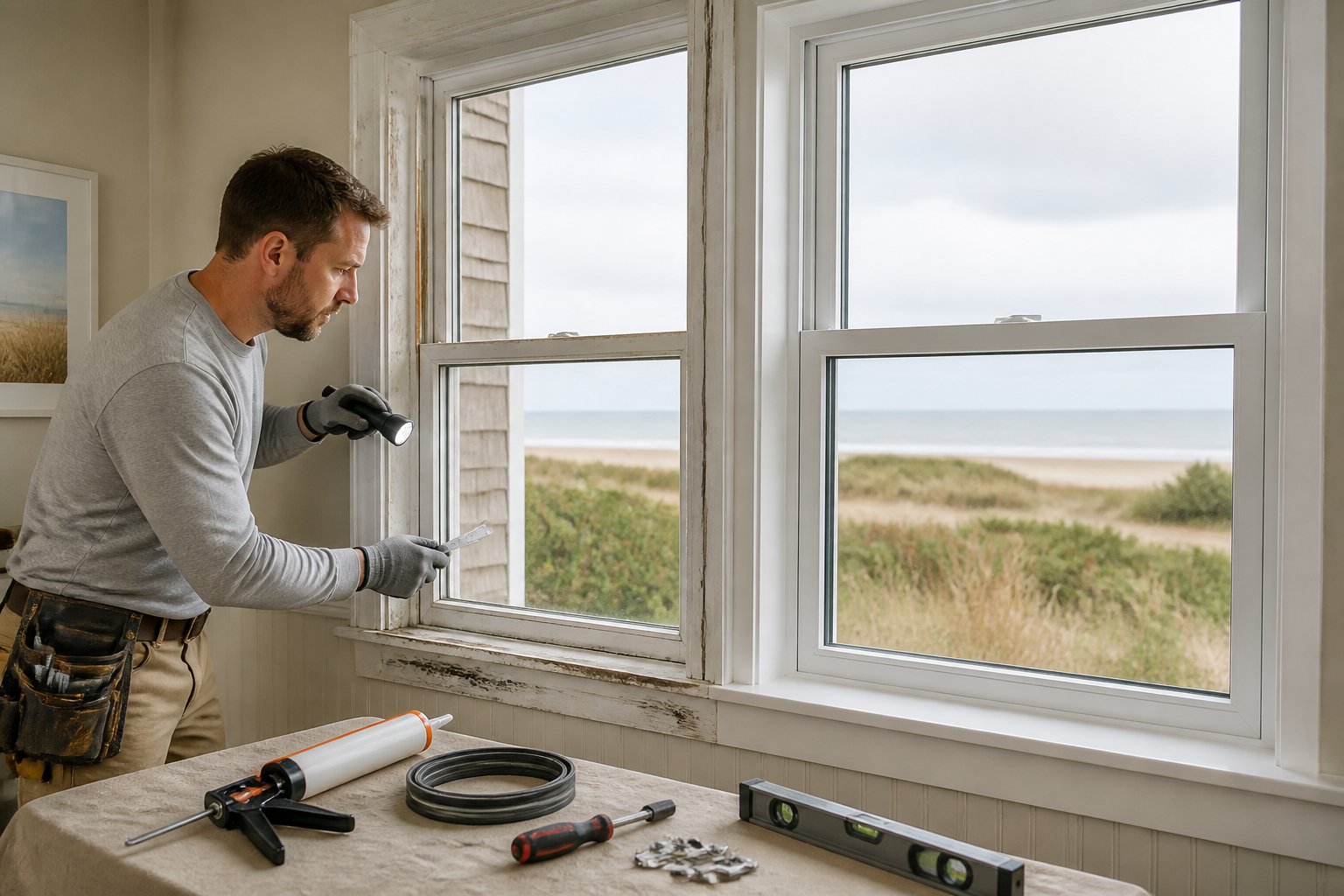
Many window problems on the Outer Banks come from salt air, wind-driven rain, and humidity rather than a failed window. Fogged glass, rusted hardware, torn screens, and cracked caulk can often be fixed for a fraction of full replacement cost.
Foggy Panes and Failed Insulated Glass Units
Fog between the panes means the seal on the insulated glass unit (IGU) failed and moisture got inside. The frame, sash, and hardware are usually still fine.
In most cases, a glass shop can replace just the sealed unit. You keep the existing frame and skip a full window installation.
Typical costs run about $350 to $1500 per unit, depending on size, low-E coating, and whether the glass is tempered or impact-rated.
A few things to check first:
- Age of the window. If it is under 20 years old, glass-only replacement usually makes sense.
- Warranty. Andersen, Pella, and other major brands often cover IGU seal failure for 10 to 20 years.
- Sash type. Some vinyl windows are welded shut, so the whole sash must be swapped instead.
Replacing the unit restores the insulating gap and brings back most of the original energy efficiency.
Damaged Screens, Hardware, Caulk, and Weatherstripping
These are the least expensive repairs, and they solve a surprising number of complaints about drafty or sticky windows and doors.
Salt air corrodes cranks, hinges, locks, and balance springs. Replacement parts are widely available for common brands, and swapping them out is often a one-hour job.
| Repair | Common Cost | What It Fixes |
|---|---|---|
| Screen rescreening | $25–$75 per screen | Tears, pet damage, sagging mesh |
| Crank or balance replacement | $75–$200 | Windows that stick or won’t stay open |
| Weatherstripping | $10–$40 per window (DIY) | Drafts, whistling, water at the sill |
| Exterior caulking | $5–$15 per tube | Air leaks and water entry at the frame |
Use a marine-grade or 100% silicone exterior sealant near the beach. Standard latex caulk breaks down fast under UV and salt exposure.
Minor Glass Damage and Localized Frame Repairs
A single cracked or chipped pane can usually be replaced in place. The glazier removes the old glass, cleans the channel, and sets new glass with fresh glazing compound or stops.
Small rot spots on wood frames and sills can be dug out and rebuilt with epoxy wood filler, then primed and painted. This works well when the damage is limited to the surface and the structural parts of the frame are sound.
Aluminum-clad and vinyl frames rarely rot, but the corners can separate. A sash rebuild or corner repair is often cheaper than a new unit.
Push toward replacement when rot reaches the jamb or studs behind it, or when several windows on the same wall show the same damage.
Damage That Calls for New Windows
Some window problems can be patched, but others mean the unit has reached the end of its life. Rotted frames, single-pane glass, and storm damage all point toward full window replacement rather than another repair bill.
Rotten or Warped Frames and Recurring Leaks
Soft, spongy wood around a sash or sill is a clear sign of water intrusion. Once rot spreads into the frame, no amount of caulk or paint will stop it.
Press a screwdriver tip into the wood. If it sinks in easily, the structure is gone.
Warped frames cause similar trouble. Salt air, humidity, and constant sun on Outer Banks homes can twist vinyl and swell wood until the sash no longer sits square in the opening.
Watch for these warning signs:
- Stains or dark streaks on the drywall below the window
- Mold or mildew on the trim
- A window that sticks or won’t lock
- Gaps you can see daylight through
Repeated leaks in the same spot usually mean water is getting behind the flashing. At that point, replacing the window lets your contractor correct the flashing, house wrap, and sill pan while everything is open.
Single-Pane Windows and Aging Coastal Units
Many older beach cottages and rentals still have single-pane windows. One layer of glass does little to slow heat transfer, and it offers no real storm protection during hurricane season.
Aluminum frames from the 1970s and 1980s add another problem. Metal conducts heat and cold, and salt air corrodes it over time.
If your windows are 20 to 30 years old and you’re paying to run the AC constantly, replacement usually makes more sense than repair. Newer double-pane units with low-E coatings and impact-rated glass cut energy use and stand up better to wind-driven rain.
Replacement also brings the opening up to current code compliance for wind loads, which matters for insurance and resale on the coast.
Storm Damage, Broken Seals, and Compromised Openings
Fog or moisture trapped between two panes means the seal has failed. The insulating gas has escaped, and the unit no longer performs as designed. Sealed glass cannot be repaired, though some units allow a glass pack swap instead of full replacement.
Storm damage is different. After a hurricane or nor’easter, check for:
| What You See | What It Means |
|---|---|
| Cracked or shattered glass | Glass replacement may work if the frame is sound |
| Frame pulled away from the wall | Structural damage, replace the unit |
| Water inside the wall cavity | Flashing failed, open the opening and rebuild |
| Bent or missing hardware | Repairable in most cases |
If wind pushed the frame out of square, the opening itself may need repair before a new window goes in. Many homeowners use insurance-covered storm repairs as a chance to move up to impact-rated windows.
Why Coastal Windows Fail Faster on the Outer Banks
Salt air, wind-driven rain, and constant humidity attack windows on the Outer Banks in ways that inland homes never experience. The materials you choose, the glass package inside the frame, and the pressure ratings on the label all decide whether your windows last five years or twenty-five.
Why Impact-Rated Products Matter on the OBX
Dare and Currituck counties sit in wind-borne debris regions, so local code often requires impact-rated windows or approved shutters.
Coastal impact windows pass two separate tests. First, a cannon fires a 2×4 at the glass to mimic flying debris. Then the unit goes through thousands of pressure cycles to confirm the seal and frame hold.
Look for the Performance Grade (PG) number on the label. A PG50 unit handles moderate exposure, while PG70 or higher suits oceanfront homes facing direct wind loads.
Storm protection also matters for insurance. Many carriers offer wind mitigation credits when you install documented impact-rated products, which can offset part of the replacement cost.
Always confirm requirements with your local code official before ordering.
Laminated Glass, Low-E Coatings, and Argon Gas Fill
Laminated glass uses a clear plastic interlayer bonded between two panes. When it breaks, the pieces stick to the layer instead of falling out, which keeps wind and rain from pressurizing your house.
You have two options:
| Glass Type | Best Use on the OBX |
|---|---|
| Monolithic laminated | Unconditioned spaces, garages, mild climates |
| Dual-pane laminated | Main living areas where energy efficiency matters |
Low-E coatings are microscopically thin metal layers that reflect heat. On the Outer Banks, they cut summer solar heat gain and reduce fading on floors and furniture.
Argon gas fill sits in the sealed space between panes. It slows heat transfer better than plain air.
One caution: argon only works while the seal holds. Coastal humidity and daily temperature swings put stress on insulated glass seals, which is why foggy panes show up so often here.
Selecting Windows for Wind, Salt Air, and Driving Rain
Frame material drives longevity more than any other single choice.
- Fiberglass and composite — low expansion, holds paint, resists salt corrosion well
- Vinyl — no corrosion concern, but check the PG rating on large openings
- Aluminum — strong, though standard finishes pit quickly within a mile of the ocean; ask for a coastal-grade coating
- Wood-clad — fine with a protected cladding, but exposed wood needs steady upkeep
Hardware fails before frames do. Specify stainless steel hinges, locks, and fasteners rather than plated steel.
Check the water penetration rating too. Driving rain on the OBX arrives sideways, so a higher DP and water test number protects the wall behind the window.
Rinse frames, tracks, and hardware with fresh water a few times a year to remove salt buildup.
Installation Details That Matter on Hatteras Island and Ocracoke
On the southern Outer Banks, a quality window is only as good as the crew that sets it. Flashing, drainage, door selection, and permit rules all decide whether your investment lasts 20 years or leaks in three.
Flashing, Drainage, and Moisture Management
Water intrusion causes more window failures here than broken glass does. Wind-driven rain moves sideways, so it can push past a poorly sealed sill and soak the framing behind your siding.
A correct window installation follows a layered order:
- Sill pan first, sloped or with end dams, so any water that gets in drains back out
- Flexible flashing tape at the jambs, lapped over the sill pan
- Head flashing installed under the housewrap, never over it
- Backer rod and sealant at the exterior joints, with the bottom edge left open to weep
Skipping the sill pan is the most common shortcut. It hides behind trim and shows up years later as soft sheathing or a musty smell under the window.
Ask your contractor which flashing products they use and how they tie the window into the weather barrier.
When to Replace Sliding Glass Doors and Entry Doors
Sliding glass doors take the hardest beating on oceanfront and soundfront homes. Salt air pits the rollers and tracks, and once a panel drags, the weatherstripping stops sealing.
Repair makes sense when the issue is limited to rollers, tracks, or a single failed insulated glass unit.
Go with door replacement when you see:
| Sign | What it usually means |
|---|---|
| Rust or corrosion in the frame | The frame itself is failing |
| Water pooling on interior flooring | The sill and drainage are compromised |
| Rot at the jambs or threshold | Structural repair is needed, not a part swap |
| Single-pane glass in a rental | Energy and safety upgrade is overdue |
Entry doors follow the same logic. If the bottom rail is swollen or the threshold has separated from the subfloor, a new unit with a composite jamb outlasts another round of patching.
Permits, Wind Ratings, and Code Compliance
Hatteras Island and Ocracoke sit in Dare and Hyde counties, and both fall in high wind zones under the North Carolina Residential Code. Design pressure and impact requirements are stricter than they are on the mainland.
A few points to confirm before work starts:
- Permits. Dare County and Hyde County generally require a permit for window and door replacement, especially when the opening size changes.
- Wind ratings. Your windows and doors should carry a design pressure rating that matches the exposure category for your address.
- Impact or shutters. Code compliance in wind-borne debris regions typically calls for impact-rated glass or approved opening protection.
- Egress. Bedroom windows must still meet minimum opening size after replacement, which matters when you switch frame types.
Ask for the NFRC label and the product approval documentation. If a contractor cannot supply the design pressure numbers, that is a reason to keep looking.
Budgeting, Claims, and Choosing Local Help
Money drives most window decisions, and the math changes once you factor in storm damage, insurance coverage, and how far a crew has to drive to reach your house. Below you’ll find cost comparisons, claim documentation steps, and what to expect from installers across the Outer Banks.
Comparing Repair Costs With Replacement Value
A simple repair often costs a fraction of a new unit. Here’s a general range for coastal homes:
| Work | Typical Cost |
|---|---|
| New sash balance or crank hardware | $75–$200 |
| Re-glazing a single pane | $150–$400 |
| Failed insulated glass unit swap | $250–$600 |
| Full replacement window, installed | $600–$1,600+ |
| Full Frame Impact-rated replacement window, installed | $2,500–$5,000+ |
Use a simple rule: if repairs cost more than half the price of a new window, replacement usually makes more sense.
Also weigh what you get back. New windows can lower cooling bills, and some ENERGY STAR qualified units may count toward the federal energy efficiency home improvement credit. Repairs rarely qualify.
Rot in the frame or sill changes the math fast. Once wood framing is soft, a glass-only fix leaves the real problem in place.
Documenting Storm Damage for Insurance Claims
Photograph everything before you clean up. Take wide shots of the room and the exterior wall, then close-ups of cracked glass, bent frames, and water stains on drywall or flooring.
Keep the broken parts if you can. Adjusters often want to see the damaged sash or screen.
Then do these four things:
- Board up or tarp the opening to prevent more water damage, and save those receipts.
- Write down the date and storm name, plus wind conditions you observed.
- Call your carrier quickly — many policies have reporting deadlines.
- Get a written estimate from a licensed contractor that separates repair from full replacement.
Know your policy details. Many North Carolina coastal policies carry a separate windstorm or hurricane deductible, often 1% to 5% of the dwelling’s insured value, which can exceed the cost of a few windows.
If a federal disaster declaration covers Dare or Currituck County, FEMA’s Individuals and Households Program may help with uninsured repair needs. It supplements insurance rather than replacing it.
Service Considerations Across Outer Banks Communities
Response times and pricing shift as you move up and down NC 12. Crews based in Kill Devil Hills, Kitty Hawk, and Nags Head cover the central beaches quickly and often handle small repairs.
Jobs in Duck and Corolla may include trip charges, and summer traffic can stretch a two-hour service call into most of a day. Book off-season when possible.
Ask every contractor these questions:
- Are you licensed in North Carolina and insured for work at height?
- Do your units meet Dare County wind-load and impact requirements?
- Who handles the permit and inspection?
- What’s the warranty on labor, not just the product?
Rental property owners face a tighter window. Most repair and window replacement work needs to happen between October and April, before check-ins resume.
Frequently Asked Questions
Salt air, high humidity, and hurricane season all change the math on window work in the Outer Banks. The answers below cover repair costs, which damage is fixable, when replacement makes more sense, and how to check that a contractor is qualified for coastal jobs.
Is it better to repair or replace damaged windows in a coastal home?
It depends on what failed and how old the window is. If the frame is solid and only the hardware, balance, or weatherstripping is worn, a repair usually makes sense.
Replacement is the better choice when salt has corroded metal parts throughout the unit, the wood frame is rotted, or the window no longer seals against wind-driven rain.
Age matters too. On a window that is more than 20 years old, repair often buys you a few seasons at best, and coastal conditions speed up the next failure.
How much does window repair cost compared with full window replacement?
Common repairs are far cheaper than replacement. Here is a general range for the Outer Banks:
| Work | Typical cost per window |
|---|---|
| Weatherstripping or seal replacement | $75 – $200 |
| Sash balance or hardware repair | $100 – $350 |
| Glass pane replacement (single unit) | $200 – $500 |
| Insulated glass unit (IGU) swap | $850 – $1,700 |
| Full window replacement, installed – Non- Impact | $1500 – $5,500+ |
Impact-rated replacement windows sit at the top of that range and can run higher on large or custom sizes. Labor, permits, and disposal fees add to the total, so ask for a written quote that lists each line item.
A useful rule: if repairs cost more than about half the price of a new window, put the money toward replacement.
What types of window damage can be repaired instead of replaced?
Plenty of problems are fixable without a new unit:
- Broken glass in a single-pane or sash-only window
- Failed weatherstripping that lets in drafts and moisture
- Sticking or hard-to-open sashes caused by worn balances or swollen wood
- Rusted or stiff locks, cranks, and hinges from salt exposure
- Cracked or dried caulk around the frame
- Torn screens, which are common after a storm season
- Small areas of soft wood on the sill or frame that can be cut out and patched
Many manufacturers, including Andersen and Pella, sell replacement parts for older lines, so ask about part availability before assuming the whole window has to go.
When should storm-damaged or foggy windows be replaced?
Fog between the panes means the seal on the insulated glass unit has failed. Sometimes you can swap just the glass unit, but if the frame is also damaged or the window is old, full replacement is usually the smarter spend.
Replace after a storm when you see any of these:
- The frame is cracked, twisted, or pulled away from the wall
- Water stains or soft wood appear around the interior trim
- The window no longer closes or locks properly
- Multiple windows on the same wall failed at once, which points to a structural or flashing problem
Document the damage with photos before any repair. Your insurer will want that record, and storm damage is often covered.
Are impact-resistant replacement windows worth the investment for coastal properties?
For homes on the Outer Banks, they usually pay off. Impact-rated windows use laminated glass with a plastic interlayer that holds together when struck, which keeps the building envelope sealed during high winds.
The benefits go beyond storms:
- No shutters or plywood to install before every named storm
- Possible insurance discounts on wind and hail coverage
- Better sound control and UV protection for interior finishes
- Code compliance in Dare County wind zones, where impact glazing or approved shutters are required on new and replacement units
The cost is real. Expect to pay roughly 25% to 50% more than standard replacement windows. If you rent your property or plan to stay long-term, that gap is easier to justify.
Look for windows tested to ASTM E1886 and E1996 standards, and confirm the product carries a Florida or Miami-Dade approval number for large missile impact.
How can I find a reliable local company for window repair or replacement?
Start with contractors who work in coastal conditions every day. A company based in Kill Devil Hills, Nags Head, or Manteo will know local permit rules and the wind-load requirements for your address.
Check these before you sign anything:
- North Carolina general contractor license and proof of liability insurance
- Manufacturer certification, such as an Andersen Certified Contractor, which can add an installation warranty on top of the product warranty
- Written estimates from at least three companies, listing the product line, glass package, installation method, and cleanup
- Recent local references, ideally from oceanfront or soundfront homes
- Warranty terms in writing, covering both the product and the labor
Ask how the installer handles flashing and sealing. In a salt-air environment, poor flashing causes more callbacks than the window itself.
